



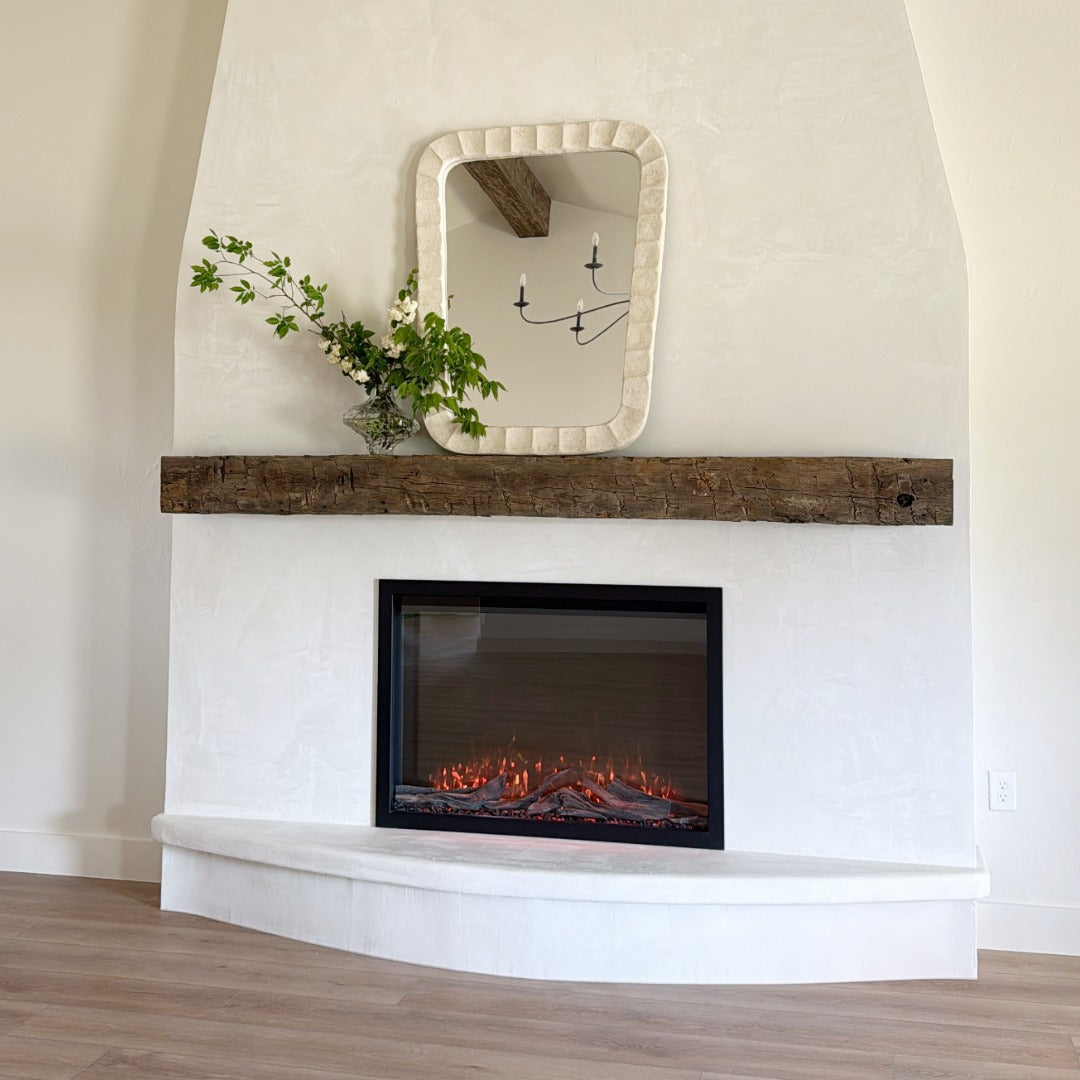
A textured fireplace accent wall can turn a simple living room into a polished, design-forward space. And when you pair the right texture with a linear electric fireplace, the result feels clean, modern, and intentional—not busy or overbuilt.
Fireplace feature walls are especially effective when they add depth without overwhelming the room. Wood slats, fluted panels, plaster-style finishes, stone, tile, and mixed-material designs can all help a fireplace wall feel more custom, architectural, and complete.
The key is choosing a texture that enhances the long horizontal line of the fireplace instead of competing with it. Here’s how to plan a modern electric fireplace feature wall that looks beautiful, functions well, and works with today’s most popular linear units.


What Texture Works Best Behind A Linear Electric Fireplace?
The best textures for a linear electric fireplace are
-
wood slats
-
fluted panels
-
large-format tile
-
stone-look panels
-
smooth plaster finishes
-
subtle 3D wall panels.
These materials work well because they create dimension while keeping the fireplace opening crisp and visually balanced. For most homeowners, the safest design rule is simple: choose one main texture, keep the fireplace opening clean, and make sure the pattern lines up intentionally around the unit.
Popular Textured Fireplace Accent Wall Ideas
Flat accent walls still work, but many homeowners are looking for fireplace walls that feel more custom and architectural. Texture helps the entire wall feel finished, especially when the fireplace is paired with a TV, built-ins, shelving, or cabinetry.
Popular fireplace wall textures include:
-
Vertical wood slats and ribbed panels
-
Fluted or grooved wall panels
-
3D geometric panels
-
Smooth plaster, limewash, or microcement looks
-
Large-format tile or stone-look slabs
-
Mixed materials like wood + tile, wood + stone, or plaster + shelving
For media walls, texture can also help tie everything together. Instead of a TV floating above a fireplace on plain drywall, the wall becomes one cohesive design feature.

Design Rules for Pairing Texture with a Linear Electric Fireplace
Before choosing your wall material, choose the fireplace look you want: frameless, framed, flush, partially recessed, or wall-mounted. Linear electric fireplaces create a clean horizontal focal point, so every material decision should support that line.
Keep the Fireplace Opening Clean
The texture should stop neatly at the fireplace opening, or where the fireplace trim will begin. Avoid rough cuts, uneven edges, or patterns that appear to run awkwardly into the unit.
For slats, that means planning where each vertical piece lands before installation. For tile or stone, that means deciding whether you’ll use metal trim, a mitered edge, a return, or a reveal.
Match Texture Scale to Wall Size
Small walls usually look better with finer textures, such as slim slats, narrow fluting, smooth plaster, or subtle ribbed panels.
Large walls can handle bolder textures like oversized stone, wider slats, deeper 3D panels, or mixed-material designs.
As a general starting point:
|
Fireplace Width |
Best For |
Design Notes |
|
50" |
Smaller living rooms, bedrooms, compact media walls |
Works well with subtle texture and smaller TVs. |
|
60" |
Standard living rooms and balanced media walls |
A strong middle-ground size for most feature walls. |
|
72" |
Large living rooms, wide walls, dramatic media walls |
Pairs well with stone, slab, plaster, and mixed-material designs. |

6 Textured Fireplace Accent Wall Style Recipes
1. Warm Wood Slat Media Wall
Best for: Modern, Japandi, transitional, and warm minimalist spaces
Texture: Vertical wood slats or acoustic wood panels
Fireplace pairing: 50", 60", or 72" linear electric fireplace
Best finish: Natural oak, walnut, warm beige, or soft greige
A slat wall with a linear electric fireplace is one of the most popular modern fireplace wall looks because it feels warm, clean, and architectural. The vertical slats add height, while the horizontal fireplace creates balance.
For the cleanest result, center the fireplace on the wall first. Then align the slat layout to the fireplace centerline, not just the wall edges. This helps the pattern feel intentional around the opening.
Execution notes:
-
Run slats floor-to-ceiling for the most architectural look.
-
Stop the slats cleanly at the fireplace opening.
-
Use a reveal, trim strip, or smooth surround around the firebox.
-
Plan TV and soundbar placement before installing the slats.
-
Add hidden cable routing or an access panel behind the TV zone.
Avoid: Starting slats from one side without checking where they land at the fireplace opening.

2. Fluted Panel Fireplace Wall
Best for: Soft modern, contemporary, and boutique hotel-inspired spaces
Texture: Fluted, reeded, ribbed, or grooved panels
Fireplace pairing: Frameless or slim-trim linear unit
Best finish: Warm white, taupe, mushroom, charcoal, or natural wood
Fluted panels are a softer take on the slat wall look. Instead of strong individual strips, you get a more continuous ribbed texture that plays beautifully with light.
This look works especially well when the fireplace is recessed or surrounded by a smooth border. The border gives the eye a place to rest and prevents the grooves from making the opening look too busy.
Execution notes:
-
Use a smooth reveal around the fireplace.
-
Keep grooves vertical for height and elegance.
-
Paint panels before final installation when possible.
-
Use side lighting or sconces to bring out the ribbed shadow lines.
-
Choose a low-contrast color if the TV will also be on the wall.
Avoid: Running deep fluting directly into the fireplace opening without a clean transition detail.
3. Smooth Plaster Or Microcement-Look Fireplace Wall
Best for: Organic modern, minimalist, Mediterranean, and warm contemporary spaces
Texture: Plaster, limewash, Roman clay, microcement-look coating, or smooth concrete-look finish
Fireplace pairing: Frameless linear fireplace or flush built-in unit
Best finish: Warm white, clay, sand, stone, greige, taupe, or soft gray
A plaster-look fireplace wall is ideal when you want texture without pattern. It adds movement and depth but still lets the flame remain the focal point.
This is a great option for homeowners who want a modern electric fireplace feature wall that feels quiet, sophisticated, and timeless.
Execution notes:
-
Keep the fireplace opening simple and sharp.
-
Use subtle wall washers or directional lighting to highlight the finish.
-
Test finish samples in natural and evening light.
-
Confirm heat and clearance requirements before applying any finish near the unit.
-
Use a skilled installer for specialty plaster or microcement-style applications.
Avoid: Choosing a highly mottled finish if you plan to use bold or colorful flame settings.

4. Large-Format Tile Or Stone-Look Slab Wall
Best for: Luxe modern, transitional, contemporary, and high-impact living rooms
Texture: Porcelain slab, large-format tile, stone veneer, marble-look tile, limestone-look panels
Fireplace pairing: 60" or 72" linear electric fireplace
Best finish: Honed stone, travertine-look, limestone-look, soft marble, slate, or warm concrete
Tile and stone-look walls are excellent for homeowners who want a polished, durable feature wall. The fewer grout lines, the more elevated the final result feels.
For linear fireplaces, large-format materials tend to work better than small busy patterns. A long, clean unit pairs beautifully with broad stone veining or subtle tile movement.
Execution notes:
-
Dry lay tile or slabs before installation.
-
Align major veining intentionally around the fireplace.
-
Decide on mitered corners, metal trim, or finished edges before ordering materials.
-
Add lighting from above or the sides to reveal the stone texture.
-
Plan outlet, cable, and service access locations before tile goes up.
Avoid: Small patterned tile that competes with the flame.
5. 3D Geometric Panel Fireplace Wall
Best for: Contemporary, artistic, high-contrast, and statement walls
Texture: 3D wall panels, geometric MDF panels, raised-relief panels, painted dimensional panels
Fireplace pairing: Clean-face linear fireplace with a simple surround
Best finish: One solid paint color, usually matte or satin
A 3D panel fireplace wall works best when the pattern is controlled. The goal is sculptural, not chaotic.
Choose panels with a repeat that can be centered around the fireplace. Then paint the panels and surrounding trim the same color for a built-in effect.
Execution notes:
-
Map panel seams before installing.
-
Center the pattern on the fireplace or TV/fireplace centerline.
-
Use crisp trim or a flat reveal at the fireplace opening.
-
Fill, caulk, sand, and paint seams carefully.
-
Choose simpler flame colors to keep the wall from feeling too busy.
Avoid: Installing panels without a seam plan. Random seams near the firebox can distract from the fireplace and make the wall look unfinished.
6. Mixed-Material Fireplace Feature Wall
Best for: Custom remodels, open-concept living rooms, and designer media walls
Texture: Wood + tile, wood + stone, plaster + built-ins, slats + smooth panels
Fireplace pairing: Linear fireplace with cabinetry, shelving, or TV integration
Best finish: One warm material + one quiet neutral material
Mixed-material fireplace walls are ideal when you want a high-end custom look. The secret is restraint. Pick two primary materials and let one lead.
For example:
-
Wood slats behind the TV + smooth plaster around the fireplace
-
Stone-look tile around the fireplace + wood cabinets below
-
Fluted panels on the main wall + smooth painted side niches
-
Plaster fireplace surround + floating wood shelves
Execution notes:
-
Establish one centerline for the entire wall.
-
Keep the fireplace opening cleaner than the surrounding design.
-
Use consistent reveals between materials.
-
Hide media components inside cabinets or side storage.
-
Add removable access panels for outlets, cables, and service needs.
Avoid: Mixing too many textures at once. Wood, stone, tile, shelving, a TV, a soundbar, and colorful flames can feel crowded if every element competes for attention.
Texture Compatibility Table
|
Texture Type |
Best Look |
Works Best With |
Difficulty |
Pro Tip |
|
Wood slats |
Warm modern media wall |
50", 60", or 72" linear fireplace |
Medium |
Align slats to the fireplace centerline. |
|
Fluted panels |
Soft modern feature wall |
Frameless or slim-trim linear unit |
Medium |
Add a smooth reveal around the opening. |
|
3D panels |
Statement fireplace wall |
Simple linear fireplace |
Medium to High |
Plan seams before installation. |
|
Plaster or microcement look |
Organic modern wall |
Flush or recessed linear fireplace |
High |
Use lighting to highlight subtle texture. |
|
Large-format tile |
Luxe modern surround |
60" or 72" linear fireplace |
High |
Plan edges, corners, and veining early. |
|
Stone veneer |
Natural, architectural focal wall |
Larger linear fireplace |
High |
Keep stone texture subtle near the opening. |
|
Mixed materials |
Custom media wall |
Linear fireplace + TV + storage |
High |
Limit the design to two main materials. |
|
Painted ribbed MDF |
Budget-friendly modern texture |
Wall-mounted or recessed unit |
Medium |
Paint everything one color for a built-in feel. |
Planning A Media Wall with Texture
A fireplace and TV wall can look beautiful, but it needs to be planned as one system. Before framing or finishing the wall, decide:
-
Will the TV be centered above the fireplace or offset?
-
Will the fireplace be wider than the TV, the same width, or narrower?
-
Where will the soundbar go?
-
Where will outlets and low-voltage cable runs be hidden?
-
Will media devices live in cabinetry, a side niche, or behind an access panel?
-
How will the fireplace be serviced if needed?
A good rule of thumb: let the fireplace set the horizontal foundation, then size the TV and wall texture around it.

Mistakes To Avoid Before You Build
Choosing a Pattern that Competes with the Flame
The fireplace should still feel like the focal point. If the wall has bold geometry, heavy veining, high-contrast tile, and colorful flame settings all at once, the design can feel crowded.
Misaligning The Texture At The Opening
This is especially important with slats, fluting, grooves, tile, and 3D panels. Always create a layout drawing before cutting material.
Forgetting Service or Cable Access
A feature wall should look clean, but it should not trap outlets, junction boxes, cords, soundbar wiring, or fireplace access points behind permanent finishes.
Skipping the Lighting Plan
Texture needs light. Without directional lighting, the wall may look flat in the evening. Consider sconces, recessed wall washers, LED shelf lighting, or soft side lighting.
Selecting the Fireplace Too Late
The fireplace should be selected before framing, finishing, or ordering wall materials. Confirm the unit width, height, depth, installation method, trim requirements, and clearances first.
Why Modern Ember Works Well with Textured Feature Walls
Modern Ember linear electric fireplaces are a natural fit for textured fireplace accent walls because their clean profiles work well with popular wall materials, including slats, plaster, stone, tile, and fluted panels.
Their customizable flame settings also help the fireplace complement the surrounding texture. A warm wood slat wall may look best with softer amber flame tones, while a plaster or tile wall may pair beautifully with a brighter, cleaner flame look.
For homeowners planning a modern electric fireplace feature wall, Modern Ember offers the streamlined style and flexibility needed to make the fireplace feel integrated—not added on after the fact.
Shop Linear Electric Fireplaces by Width
Find the right fit for your wall design:
-
Shop 41" to 50" Electric Fireplaces
-
Shop 51" to 60" Electric Fireplaces
-
Shop 61" & Up Electric Fireplaces
Feature Wall Planning Checklist
Before you build your textured fireplace accent wall, confirm these details:
-
Fireplace width, height, depth, and installation type
-
Required clearances from the product manual
-
Wall framing and recess depth
-
Outlet or hardwire location
-
TV placement and viewing height
-
Soundbar placement
-
Cable management path
-
Access panel location
-
Wall texture layout and centerline
-
Trim, reveal, or edge detail around the fireplace
-
Lighting plan
-
Paint, stain, grout, or finish samples
-
Service access after installation
FAQs
What Is the Best Textured Wall for a Linear Electric Fireplace?
Wood slats, fluted panels, large-format tile, plaster-look finishes, stone-look panels, and subtle 3D wall panels all work well with linear electric fireplaces. The best choice depends on your wall size, room style, and how bold you want the feature wall to feel.
Can You Put Wood Slats Around A Linear Electric Fireplace?
Yes, wood slats can be used as part of a fireplace feature wall, but the installation must follow the fireplace manufacturer’s clearance and installation requirements. Keep the opening clean, use the correct trim or reveal, and avoid blocking vents, controls, or service access.
Are 3D Wall Panels Good For A Fireplace Wall?
3D wall panels can work well with a linear electric fireplace when the pattern is simple, the seams are planned, and the edges around the fireplace are crisp. Choose one paint color for the panels to keep the look cohesive.
What Size Linear Electric Fireplace Looks Best On A Feature Wall?
A 50-inch fireplace works well for smaller walls, a 60-inch fireplace suits many standard living rooms, and a 72-inch fireplace is best for larger media walls or wide feature walls. The best size depends on wall width, TV size, ceiling height, and surrounding materials.
Should A Linear Fireplace Be Wider Than The TV?
A linear fireplace can be wider than the TV, the same width, or slightly narrower depending on the design. For a balanced media wall, many homeowners prefer the fireplace to be equal to or wider than the TV because it creates a strong horizontal anchor.
Can You Put A TV Above A Linear Electric Fireplace?
Yes, many homeowners place a TV above a linear electric fireplace, but spacing, heat direction, viewing height, and cable management should be planned carefully. Always follow the fireplace manual and TV manufacturer guidance.
What Texture Should I Avoid On A Fireplace Accent Wall?
Avoid textures that are too busy, too high contrast, or difficult to align around the fireplace opening. Small patterned tile, random geometric layouts, and heavy veining can compete with the flame if not planned carefully.
How Do You Make A Fireplace Feature Wall Look Custom?
A fireplace feature wall looks custom when the fireplace is centered, the texture is aligned, the edges are crisp, the TV and soundbar are integrated, cables are hidden, and lighting is planned to highlight the wall material.
Share:
A Fireplace Finish with American Roots